Newest Articles
Carpal tunnel syndrome (CTS) is a condition caused by compression of the median nerve as it passes through the wrist that’s characterized by pain, numbness, tingling, and weakness in select parts of the hand. The result of a 2019 study suggests that CTS may be associated with migraine headaches. How can these two seemingly disparate [..]
There are over 3 million registered youth soccer players in the United States. While playing organized sports offers many benefits to children and teens, the activity also comes with the possibility of injury—especially knee injuries among female players.
There are two types of injuries associated with soccer: acute and overuse. Acute injuries have an immediate [..]
Whiplash associated disorders (WAD) is a term applied to a constellation of symptoms that can arise following a motor vehicle collision (MVC), slip and fall, or sports injury. It’s estimated that up to 25% of WAD patients fail to fully recover from their injury and new research suggests this may be due to changes in [..]
The term “intermittent fasting” (IF) describes a variety of eating patterns in which an individual restricts calories for a given timeframe, which typically ranges from twelve hours to several days on a recurring basis. The current research suggests that IF optimizes physiological function, enhances performance, and can slow the aging and disease processes. But how [..]
Pain and the treatment of pain is the biggest health problem in America. In her book, A Nation in Pain, Healing Our Biggest Health Problem, Judy Foreman documents that approximately 50% of American adults suffer from chronic pain (1). A conservative estimate of the direct costs and lost productivity resulting from this pain is up [..]
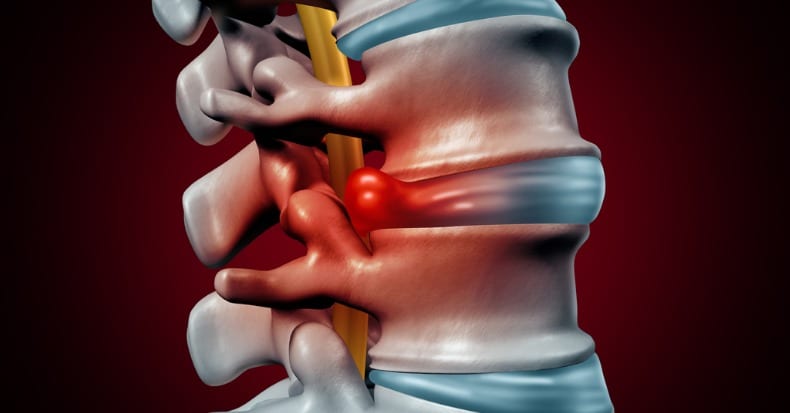
It stands to reason the more an intervertebral disk herniates, the more it will compress the spinal nerves, leading to a greater likelihood for surgical intervention. But what if that isn’t the case?
The current standard treatment of lumbar disk herniation (LDH) involves FIRST the initial use of non-surgical care for at least six weeks. [..]
Migraine headaches can have a serious impact on one’s quality of life and their ability to carry out their daily activities, both at home and at work. While chiropractic care has been demonstrated to be effective for tension-type and cervicogenic headaches, what does the literature say about its effect on migraines?
The first thing to [..]
Carpal tunnel syndrome (CTS) is the most common peripheral neuropathy—or pinching of a nerve outside of the spine—affecting between 3-6% of the population. While we usually focus on how carpal tunnel syndrome is managed, in this article we’re going to focus on why CTS is one of the costliest musculoskeletal disorders.
The symptoms associated with [..]
Hip pain is a VERY common problem among older adults that can affect their ability to remain independent. While it’s common to assume that hip osteoarthritis (HOA) is responsible for the prevalence of hip pain in the aging population, the Framingham Osteoarthritis Study (FOS) found this isn’t always the case.
The authors of the FOS [..]
Headaches are a common complaint among patients with whiplash associated disorder (WAD) following a motor vehicle collision, slip and fall, or sports injury. While in some cases, the cause of WAD-associated headache can be a concussion or traumatic brain injury (TBI), in many instances the underlying cause of WAD-related headaches can be injury to the [..]
Infantile colic (IC) is a distressing common childhood condition that affects 5-20% of infants. The condition is characterized by excessive crying, fussing, and irritability during the first five months, often with no obvious cause.
Over the last fifty years, researchers have sought to understand the cause of infantile colic. Some hypotheses include formula intolerance, an [..]
In the October 31, 2019 issue of the financial-political magazine Forbes, there is a brief article recommending the reading of a book on sleep by Dr. Matthew Walker. The author of the article is John Doerr, a venture capitalist with Kleiner Perkins. Mr. Doerr prefaces his review by noting that “Leaders from the worlds of [..]